


How to Distinguish Nylon Webbing from Imitation Nylon Webbing and What Are the Differences?
Nylon and imitation nylon webbing look almost identical, feel very similar to the touch, yet their prices… can differ by a noticeable margin. Many customers find it hard to tell them apart, often scratching their heads in confusion. Xinbo Webbing is here to teach you how to quickly identify the difference.
To distinguish them, you first need to understand what imitation nylon and real nylon are made of. The term "imitation nylon webbing" contains the word "nylon," but in essence, it is not nylon. The main material of imitation nylon webbing is polyester (polyester fiber), which has been treated through special processes to give it an appearance and feel similar to nylon. It is also known as high-strength polyester webbing. By altering the molecular structure of the polymer and using differentiated spinning technology, imitation nylon achieves a soft touch similar to nylon while retaining the excellent processability of PET.
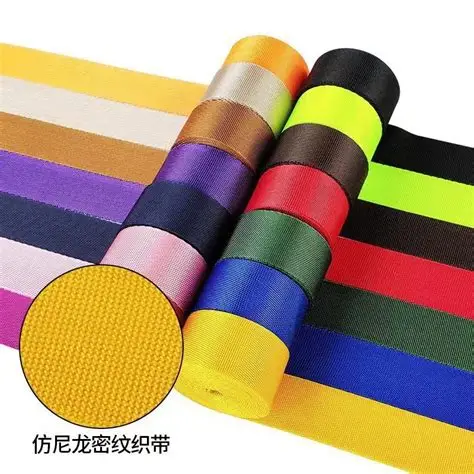
Physical properties of imitation nylon: High strength, good abrasion resistance; dimensionally stable, not prone to deformation or curling; fine texture, strong gloss (some specifications are even shinier than nylon); good acid and alkali resistance; low moisture absorption, more stable performance in humid environments; lower cost than nylon.
Common applications of imitation nylon webbing (high cost-performance ratio): Luggage accessories, pet products, garment trims.
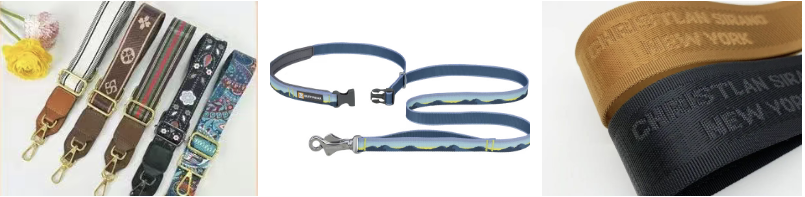
Nylon is polyamide fiber, known for its outstanding performance, especially excellent strength and abrasion resistance.
Internationally, this fiber is uniformly called nylon. In China, the first factory to produce this fiber was Jinzhou Chemical Fiber Plant, hence the local name jinlun.
Physical properties of nylon: High strength, excellent abrasion resistance; good elasticity, strong recovery after stretching; fine texture, soft surface gloss; good alkali resistance but not resistant to strong acids; relatively high moisture absorption, with slight strength loss in humid environments; melting point approximately 260°C.
Common applications of nylon webbing (high-performance / high-end): Brand luggage and apparel, pet products, specialty webbing.
The simplest and quickest way to distinguish imitation nylon from nylon webbing is by burning.
Take a small piece of webbing (you can pull out a few threads), buy a cheap lighter from a convenience store, and burn the webbing. Observe the smoke color: Nylon produces white smoke. Imitation nylon (polyester) produces black smoke, with more abundant smoke.
Black smoke is caused by incomplete combustion. The molecular structure of polyester contains benzene rings (very stable six-carbon rings). Under high heat, these benzene rings are difficult to completely break down and oxidize. Many carbon atoms fail to turn into colorless carbon dioxide and instead cluster together to form tiny carbon particles (soot). These carbon particles are released into the air as thick black smoke.
White smoke, on the other hand, indicates relatively complete combustion. Nylon's molecular chain has a linear structure (no benzene rings), mainly composed of carbon, hydrogen, oxygen, and nitrogen atoms connected by single bonds, making it easier to break and fully oxidize.
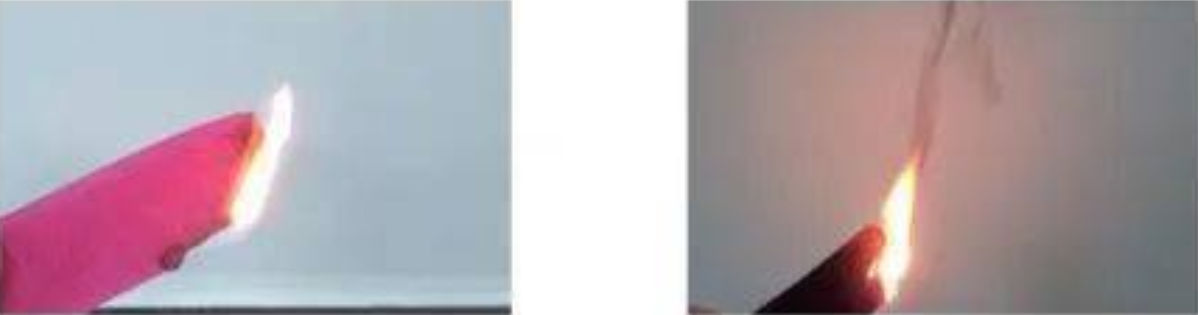
After removing the flame, nylon tends to stop burning, while imitation nylon continues to burn.
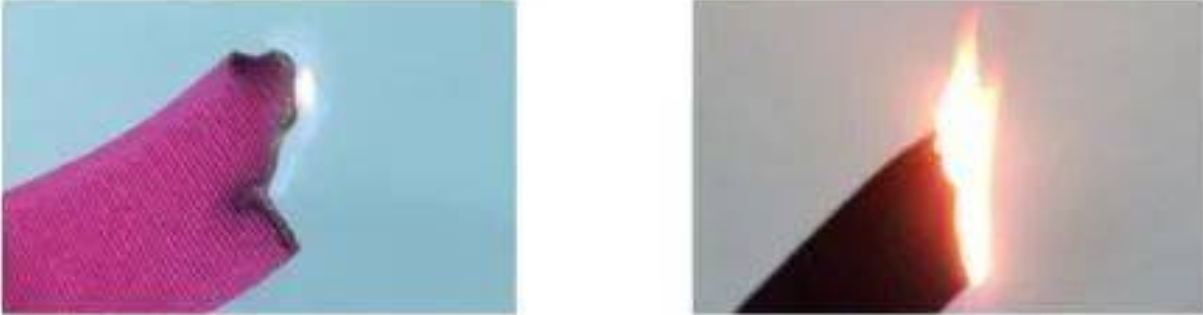
Nylon burning smells like burnt feathers or hair (protein-like odor). Imitation nylon burning gives off a faint aromatic or sweet smell, similar to burning candle wax or plastic.
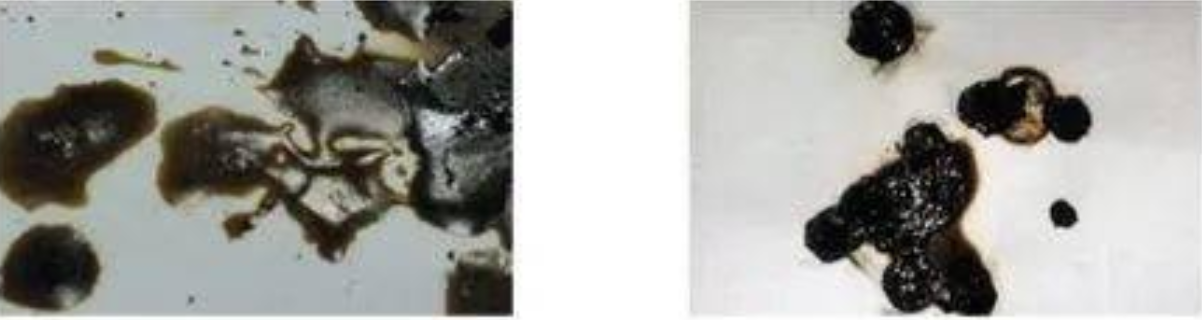
After burning and cooling, nylon webbing forms light brown hard lumps that are not easily crushed by hand, leaving no black residue on the fingers. Imitation nylon leaves black ash-like residue that blackens the fingers and can be easily crushed.
Quick summary:
Black smoke, continues burning, leaves black residue → Imitation nylon
White smoke, self-extinguishing, no black residue → Nylon


