


Nylon: The Fabric Born from a War
One of the most widely used materials in the webbing industry today is nylon. Known for its abrasion resistance, high strength, and chemical resistance, it has become the standard choice for seatbelt webbing, backpack straps, and military webbing. Yet few people know that its birth is directly tied to a war.
The story begins with silk. In the early 20th century, the United States was the world's largest consumer of silk. Parachutes, military ropes, and high-end garments all relied on imported natural silk. Initially, the raw material came from China, but Japan gradually monopolized the supply. At one point, 90% of the silk imported by the U.S. came from Japan.
When U.S.-Japan relations deteriorated, Japan cut off its silk exports. With the supply of a critical raw material in another country's hands, the United States realized it had to find a substitute.
In 1928, DuPont hired a Harvard chemist named Wallace Carothers. His initial task was not to develop a specific product, but to conduct basic research on high-molecular-weight polymers and see what came out of it. During the research, the team discovered a molten polymer that, when lifted with a rod, could be drawn into fine filaments like pulling taffy. After cooling, these filaments could be stretched further, becoming even stronger and more elastic. This accidental discovery redirected the entire project.
On February 28, 1935, polyamide 66 was formally synthesized. It had a melting point of 263°C, was insoluble in common solvents, and the fibers drawn from it had a luster close to silk, yet far surpassed natural fibers in abrasion resistance.
On October 27, 1938, DuPont officially announced the birth of the world's first synthetic fiber, naming it nylon. From basic research to industrialization, the effort took 11 years, cost $22 million, and involved 230 experts.
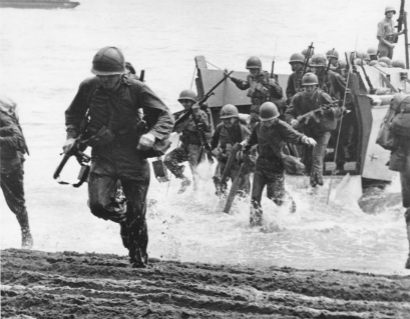
Ironically, nylon first saw action on the battlefield. During World War II, the U.S. military outfitted paratroopers with nylon parachutes. Previously, parachutes were made of Asian silk, but the war had cut off that supply chain. Nylon perfectly filled the gap. Soon after, military tents, ropes, and tire cord were also largely switched to nylon. A material developed to reduce wartime dependency on raw material imports ended up becoming part of the war itself.
After the war, nylon finally entered the daily lives of ordinary people. Stockings, raincoats, fishing nets, carpets, webbing… many of the textile products you encounter today likely contain nylon.
Properties of nylon:
High strength, excellent abrasion resistance; good elasticity, strong recovery; resistant to chemicals and oils; relatively high moisture absorption (wet strength decreases slightly); melting point approx. 260°C, not suitable for continuous high-temperature exposure.
Common applications:
Seatbelts, military webbing, luggage straps, outdoor gear, pet products (leashes, harnesses)
Nylon was born out of war, but it truly flourished in peacetime. May the world remain at peace.


